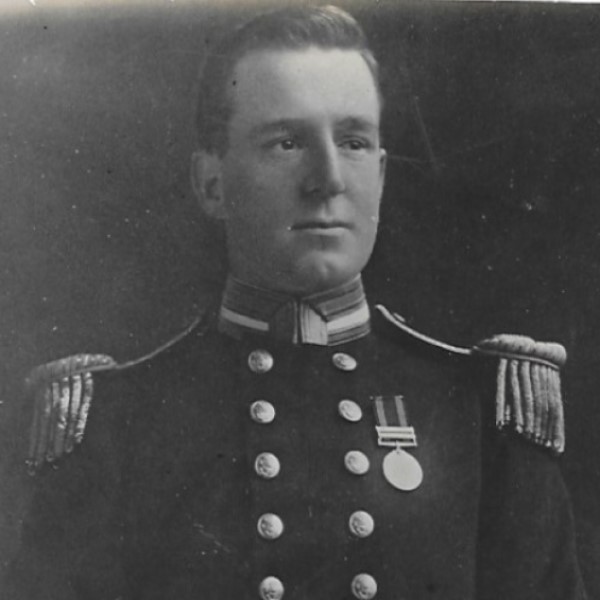
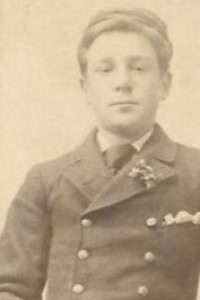
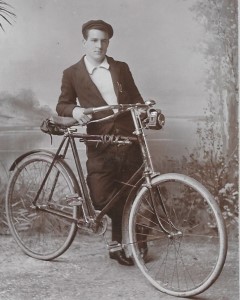
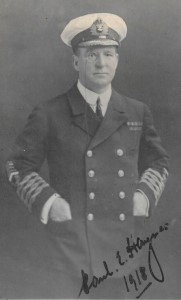
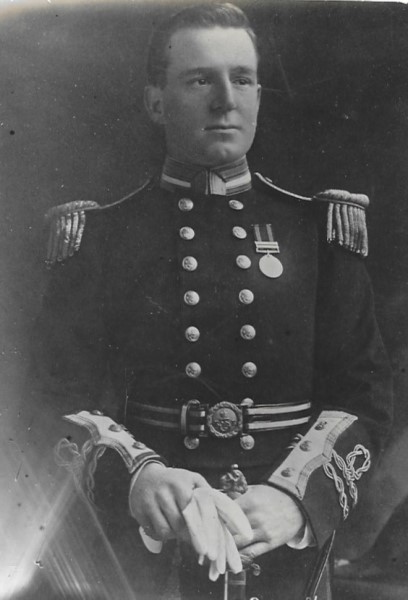
Paul Haynes followed his elder brother, Montague Haynes into a naval career, starting as a cadet on HMS Worcester and in 1895 he entered the service of the P&O Steam Navigation Company. In 1904 he joined the Royal Naval Reserve (RNR) as a sub-lieutenant. When World War I broke out in 1914, he was serving in MM Hospital Ship Soudan, attached to the Grand Fleet. In November that year, he was appointed as lieutenant-commander HMS Peel Castle, engaged on patrol duty in the Dover Patrol and the North Sea. In January 1917, he was promoted to commander and, in March 1918, to acting captain RNR.
He then left the Peel Castle to take up an appointment as commodore of convoys bringing troops and supplies from America and Canada to England. He continued this work until convoy work ceased when he was appointed to command HMS Osiris II and later as commodore superintendent Dover, where he remained until February 1920.
In the London Gazette of September 12th 1919, he was brought to the attention of the Admiralty for ‘valuable services in the prosecution of the war’. In July 1919, his rank of Captain was confirmed.
Immediately prior to his death, Captain Haynes was in command of the P&O steamship Padua. Homeward bound from Calcutta, he contracted fever and was so seriously ill that the ship put into Plymouth where he died on 22nd August 1922. He was buried in a family grave at St. Andrews Church, Laverstock, Wiltshire.